Same Day Appointments Available


Advanced Diagnostics for Better Pet Care
At Toro Park Animal Hospital in Salinas, CA, we understand the importance of timely and accurate diagnosis in providing the best care for your pets. That’s why we offer a range of veterinary diagnostic services, including in-house laboratory, x-ray, and ultrasound.

In-House Laboratory
Our in-house laboratory allows us to quickly and accurately diagnose a variety of conditions in your pet. We have state-of-the-art equipment and highly trained staff who can perform a range of tests, including blood work, urinalysis, and fecal exams. This allows us to get results within minutes, rather than having to send samples to an outside lab and wait for days. This means we can start treatment for your pet sooner, improving their chances of a full recovery.
Parasite Testing
There are several types of parasites testing available for pets, including fecal exams, blood tests, and skin scrapings. The type of testing required will depend on the type of parasite being tested for and the symptoms your pet is experiencing.
- Fecal Exams – Fecal exams are the most common type of parasite testing for pets. This test involves collecting a small sample of your pet’s feces and examining it under a microscope for the presence of parasites. Fecal exams are typically recommended for pets experiencing symptoms like diarrhea, vomiting, or weight loss.
- Blood Tests – Blood tests are another common type of parasite testing for pets. These tests can detect the presence of parasites in the blood, such as heartworms or tick-borne diseases. Blood tests are often recommended for pets that are not showing any symptoms but may have been exposed to parasites.
- Skin Scrapings – Skin scraps are used to detect external parasites, such as mites or fleas. This test involves scraping a small sample of your pet’s skin and examining it under a microscope for the presence of parasites. Skin scraps are typically recommended for pets that are experiencing skin irritation or hair loss.
Heartworm Testing in Dogs
Heartworm testing in dogs is typically done through a blood test. This test can detect the presence of heartworms in the blood, even if your dog is not showing any symptoms.
Heartworm Testing in Cats
Heartworm testing in cats is a bit more complicated than in dogs. There is currently no approved treatment for heartworms in cats, making prevention crucial. However, testing for heartworms in cats can be challenging, as they are not the natural host for these parasites. Blood tests are available for cats, but they are not always accurate. Our veterinarians may also recommend an ultrasound or x-ray to detect the presence of heartworms in your cat.
It’s recommended to test all dogs and cats for heartworms annually, even if they are on preventative medication. This is because heartworms can take up to six months to show up on a test, and if your pet is not on preventative medication, they may have contracted the parasites during that time.
FIV/FeLV Testing in Cats
FIV/FeLV testing in cats is typically done through a blood test. This test can detect the presence of these viruses in the blood, even if your cat is not showing any symptoms. It’s recommended to test all cats for FIV and FeLV, especially if they have been in contact with other cats or have any of the symptoms mentioned above. Kittens should be tested at around 8-12 weeks (about 3 months) of age, as they can contract these viruses from their mothers.
X-rays
X-rays are an essential tool in diagnosing a variety of conditions in pets. They allow us to see inside your pet’s body and identify any abnormalities or injuries. At Toro Park Animal Hospital, we have digital x-ray equipment, which produces high-quality images with minimal radiation exposure for your pet. This allows us to quickly diagnose conditions such as broken bones, foreign objects, and tumors. We can also use x-rays to monitor the progress of treatments, such as heartworm disease.

Some of the Benefits of Veterinary X-ray Include:
- Quick and painless procedure for your pet
- Non-invasive and does not require anesthesia
- Can be used to diagnose a variety of healthissues, including broken bones, tumors, and foreign objects
- Provides immediate results, allowing for prompt treatment
Ultrasound
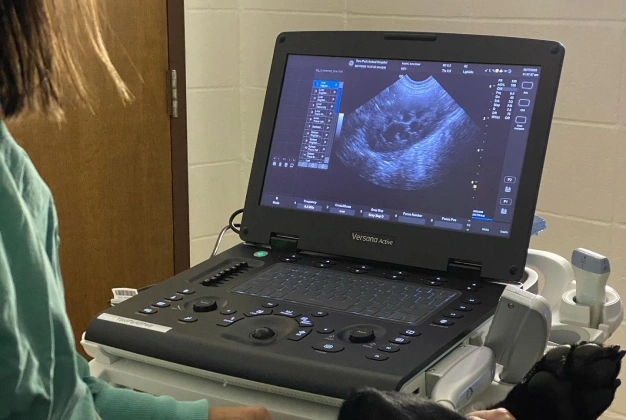
Ultrasound is another valuable diagnostic tool that we offer at Toro Park Animal Hospital. It uses sound waves to create images of your pet’s internal organs, allowing us to see their size, shape, and texture. This can help us identify conditions such as tumors, cysts, and organ abnormalities. Ultrasound is also useful for monitoring pregnancies and guiding us during procedures such as biopsies.
Some of the Benefits of Veterinary Ultrasound Include:
- Non-invasive and does not require anesthesia
- Can be used to diagnose a variety of health issues, including pregnancy, heart conditions, and tumors
- Provides real-time images, allowing for a more accurate diagnosis
- Can be used to guide procedures, such as biopsies, for more precise results
Allergy & Dermatology Testing for Pets
The first step in veterinary allergy and dermatology care is to identify the cause of your pet’s allergies or skin condition. This is usually done through a combination of skin tests, blood tests, and elimination diets. These tests can help determine the specific allergens that are causing your pet’s symptoms. Once the cause of your pet’s allergies or skin condition is identified, your veterinarian will recommend a treatment plan.